
Ingredients To Look For In A Sunscreen
When selecting a sunscreen, it's important to look for specific ingredients that provide effective sun protection. Here are some key ingredients to consider when choosing a sunscreen:
- Broad-Spectrum Protection: Look for a sunscreen that offers broad-spectrum protection, which means it protects against both UVA and UVB rays. UVA rays can prematurely age the skin and contribute to skin cancer, while UVB rays can cause sunburn.
- Zinc Oxide: Zinc oxide is a physical sunscreen ingredient that provides broad-spectrum protection by reflecting and scattering UV rays. It is gentle on the skin and suitable for all skin types, including sensitive skin. Zinc oxide is also effective immediately upon application, unlike some chemical sunscreen ingredients that require time to become active.
- Titanium Dioxide: Titanium dioxide is another physical sunscreen ingredient that works similarly to zinc oxide by reflecting and scattering UV rays. It is often used in combination with other sunscreen agents to enhance the broad-spectrum protection of the product.
- Avobenzone: Avobenzone is a chemical sunscreen ingredient that primarily absorbs UVA rays. It provides effective protection against UVA radiation and is often found in broad-spectrum sunscreens. Avobenzone is typically combined with other ingredients, such as octocrylene or octinoxate, to enhance stability and effectiveness.
- Mexoryl SX (Ecamsule): Mexoryl SX is a chemical sunscreen ingredient that offers broad-spectrum protection against UVA rays. It is known for its photostability, meaning it remains effective even when exposed to sunlight for an extended period.
- Tinosorb: Tinosorb is a group of chemical sunscreen ingredients, including Tinosorb S and Tinosorb M, that provide broad-spectrum UVA and UVB protection. They are photostable and offer longer-lasting protection compared to some other sunscreen agents.
- Oxybenzone: Oxybenzone is a common chemical sunscreen ingredient that absorbs both UVA and UVB rays. However, it has received some scrutiny due to potential environmental concerns, particularly in coral reef ecosystems. If you're looking for a reef-friendly option, consider sunscreens without oxybenzone.
When choosing a sunscreen, consider your skin type, any specific skin concerns, and your lifestyle. Look for a sunscreen with a sun protection factor (SPF) of 30 or higher and apply it generously to all exposed areas of the skin. Remember to reapply according to the product's instructions and seek shade when the sun is at its strongest.
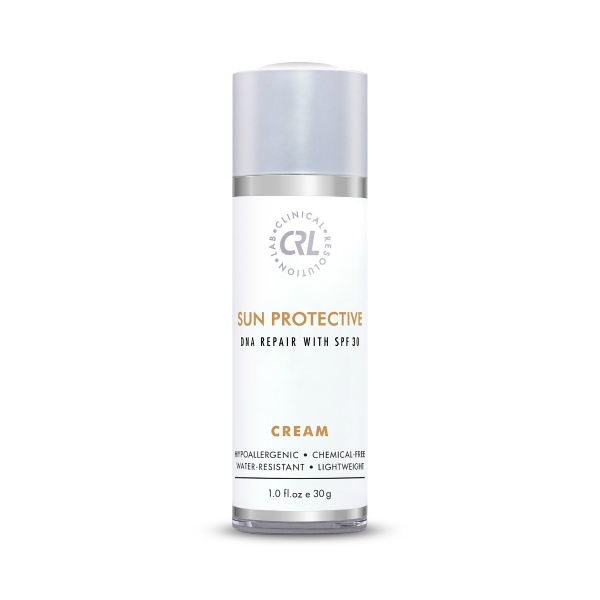
We recommend our Sun Protective Cream it is a lightweight, hypoallergenic, chemical-free sunscreen formulated with an advanced silicone elastomer to repair damaged DNA and provide anti-aging benefits:
Consulting with a dermatologist can provide personalized recommendations based on your specific needs and help you find the most suitable sunscreen for your skin.